06 Aug Direct or indirect Attack? The decision that decides a wildfire
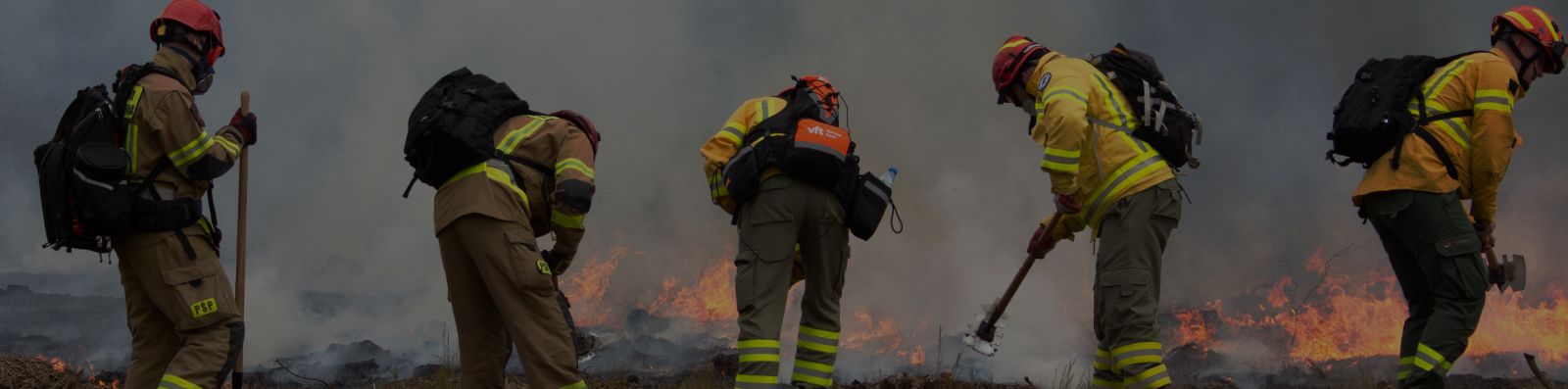
Attack the flame where it is, or fall back to a better position and let the fire come to you? Heading straight for where the fire is visible is the most natural instinct in the world. It’s also one of the most frequent mistakes on the ground.
The choice and combination between direct and indirect attack isn’t a matter of habit or convenience: it depends on hard data —rate of spread, flame length, topography, wind— and on whether the front is within or beyond what’s known as suppression capacity.
Direct, indirect, or both: the first decision
Seeing the flame and wanting to put it out right there. It’s the most natural instinct in the world, and also one of the most frequent mistakes on the ground: heading straight for where the fire is visible, without stopping to assess whether that is really the correct position —or the safest one— to face it.
Because fighting a wildfire isn’t just a matter of how much force you throw at it, but a prior decision that shapes everything else: do I attack the flame where I currently find it, or do I fall back to a position I choose and let the fire come to meet the obstacle I’ve prepared? That is the difference between direct attack and indirect attack, and it’s not a minor technical nuance: the safety of the suppression teams, the efficient use of resources, and ultimately whether the fire is contained or keeps gaining ground all depend on this decision.
The choice between the two options shouldn’t be a matter of habit or convenience. It should be made using data: rate of spread, flame length, topography, wind, access. And often the answer isn’t choosing one or the other, but combining them: splitting the operation into teams that attack directly where the fire allows it, and others that, in parallel, prepare a discontinuity further from the fire front. Direct and indirect attack aren’t interchangeable or mutually exclusive styles, but approaches suited to different conditions, sometimes coexisting in the same fire — and confusing them is one of the most common risks in an operation.
Things to consider:
- Direct attack: working on the flame itself
- Tools & machinery
- Indirect attack: getting ahead of the fire
- The difference that really matters: the safety margin
- Not two opposing approaches, but one continuum