20 Jul Are hand tools necessary in wildfires?
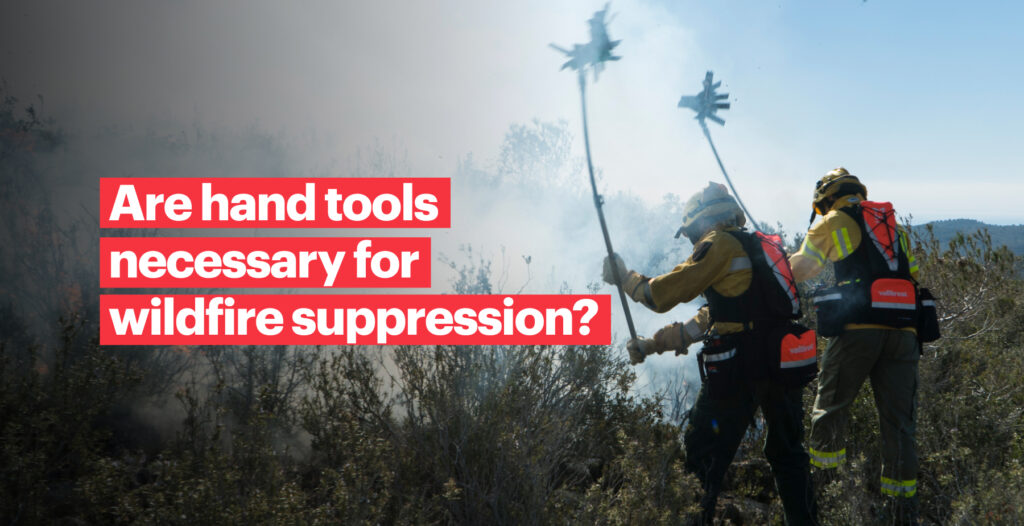
Wildfires are getting faster, more intense, and harder to reach. And yet, one of the most effective tools we have remains one of the oldest: the hand tool.
In many parts of the world, the trend has been clear: more heavy machinery, more aerial resources, fewer hands on the ground with hand tools. But wildfire doesn’t always choose terrain a truck or a tractor can reach — and that’s exactly where hand tools keep making the difference.
What are hand and power tools?
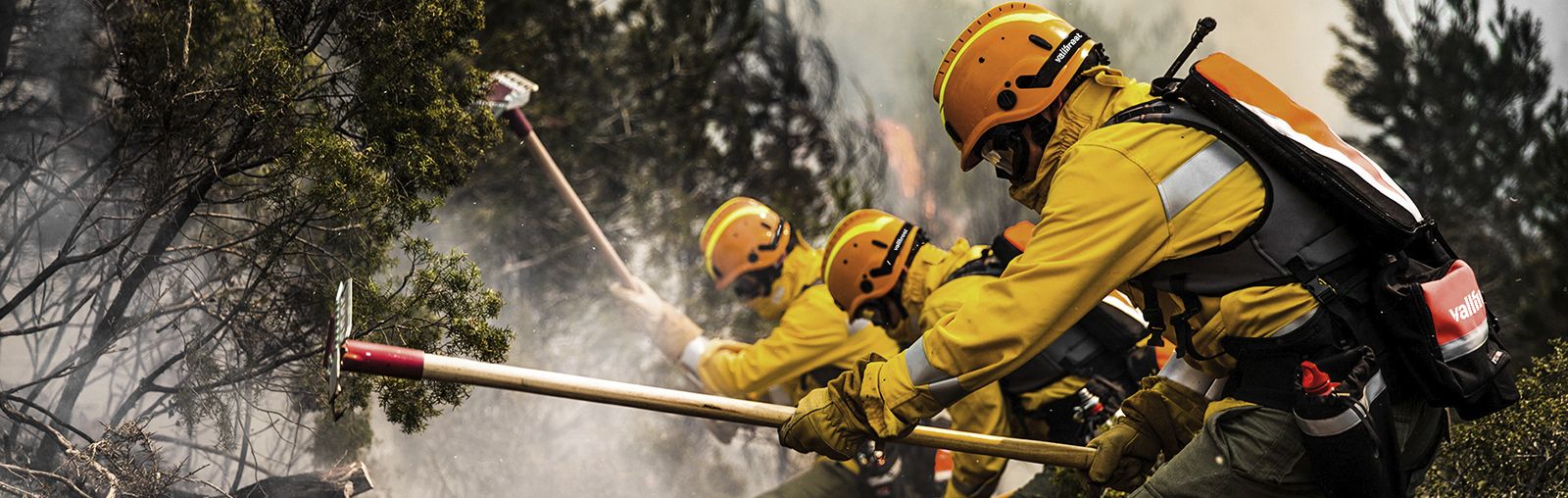
Hand and power tools are the oldest, most versatile, and still essential resource in wildfire suppression. They act directly on the fire triangle —fuel, oxygen and heat— through five basic technical actions: cutting, digging, raking, smothering and cooling. They are used both in direct attack on the flames and in indirect attack, removing fuel while building fire breaks. The great advantage of HMM manoeuvres over heavy machinery or a water line is agility: they can reach any point of the fire quickly, on foot or by helicopter, making them a key manoeuvre on steep terrain with no vehicle access.
In firefighting jargon, hand and mechanised tools covers all the portable equipment a wildland firefighter uses to physically intervene on the fire and the fuel: from a simple shovel to a chainsaw.
Their role is to act directly on one of the three elements of the fire triangle:
- Fuel – removing or modifying it (cutting, raking, digging).
- Oxygen – reducing its concentration (smothering).
- Heat – cooling down the burning material (water, scraping).
The most widely used hand tools in wildfire suppression
Globally, practically every suppression service works with these eight tools:
- Pulaski — cutting and digging in a single tool.
- McLeod — digging and raking; ideal for raking and levelling the line.
- Gorgui — digging, cutting and raking in a single multi-function tool.
- Forestry rake — cutting and raking of light organic matter.
- Troop tool — combined cutting, digging, raking and smothering.
- Fire swatter — direct smothering of the flame.
- Water backpack — cooling and reduction of flame length.
- Shovel — smothering and cooling.
Added to these are power tools, engine-driven versions that speed up the work: chainsaws and brushcutters (cutting), and blowers, with or without water atomisation (smothering and cooling).
See the full article on the Vallfirest here.
Fire Hose Tech are UK distributors for Vallfirest, find their products throughout our shop.